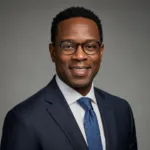
The transition in corporate leadership at major financial institutions like HDFC Bank often sparks considerable discussion, yet much of what circulates is based on outdated assumptions or outright fiction. Misinformation abounds regarding what truly drives these high-stakes appointments, especially concerning the backgrounds and capabilities of new CEOs. For veterans considering a pivot into banking careers, understanding these nuances is critical for effective career planning and using their unique skills.
Key Takeaways
- New CEOs in major banks are selected based on a multi-faceted evaluation of strategic vision, proven execution, and leadership capabilities, not solely on traditional banking tenure.
- Military veterans possess highly transferable skills like strategic planning, risk management, and crisis leadership that are increasingly valued in financial sector leadership roles.
- Succession planning in large financial institutions is a continuous, multi-year process involving extensive internal development and external candidate scouting, often prioritizing internal candidates.
- Technological acumen and a deep understanding of digital transformation are now non-negotiable requirements for top banking executives, alongside traditional financial expertise.
- Boards of directors now prioritize candidates with a strong track record in ESG (Environmental, Social, and Governance) initiatives, reflecting evolving investor and regulatory demands.
Myth 1: Banking CEOs are always career bankers who started as tellers.
There’s a persistent belief that the path to leading a major bank, particularly one as significant as HDFC Bank, involves a decades-long climb exclusively within the banking sector. The narrative often paints a picture of individuals starting in entry-level roles and carefully working their way up through every department. This is a comforting, linear story, but it rarely reflects the complex realities of modern corporate leadership. While a deep understanding of banking operations is certainly a prerequisite, the notion that a CEO must have exclusively “grown up” in a bank is increasingly outdated.
Consider the recent appointment of Sashidhar Jagdishan as CEO and Managing Director of HDFC Bank in 2020. While Jagdishan had a significant tenure with HDFC Bank since 1996, his career trajectory before that included experience outside traditional banking roles. His diverse background, including roles in finance functions and strategic planning, highlights a broader skill set. What boards seek today are leaders with a complete grasp of not just banking, but also technology, regulatory environments, and global economic trends. According to a Spencer Stuart study on CEO transitions, external hires for CEO roles in major companies have been on the rise, indicating a willingness by boards to look beyond traditional internal pipelines when strategic needs dictate. This isn’t to say internal candidates aren’t preferred, but rather that the definition of a “banking career” for a CEO has expanded significantly.
| Factor | Mythical CEO Path | Modern CEO Reality |
|---|---|---|
| Career Trajectory | Decades-long climb exclusively within banking. | Broader skill set, including non-banking experience. |
| Academic Background | Ivy League MBA is essential. | Experience, leadership, proven track record more critical. |
| Skills Valued | Traditional banking tenure. | Strategic vision, execution, digital acumen, ESG. |
| “Soft Skills” | Veterans lack collaboration, empathy. | Veterans excel at adaptive leadership, communication. |
| Candidate Sourcing | Solely internal pipeline. | Internal development and external candidate scouting. |
| Veteran Contribution | Limited relevance for corporate leadership. | Strategic planning, risk management, crisis leadership. |
Myth 2: Boards only look for candidates with an Ivy League MBA.
Another common misconception revolves around the perceived necessity of an elite academic background, specifically an MBA from a top-tier institution. While prestigious degrees can certainly open doors, they are far from the sole determinant of a candidate’s suitability for a CEO role. Experience, leadership qualities, and a proven track record of execution often outweigh academic credentials alone. Many successful CEOs, both in banking and other industries, have diverse educational backgrounds, some even without advanced degrees.
For example, several prominent figures in global finance have undergraduate degrees in engineering or liberal arts, demonstrating that a strong analytical foundation or broad perspective can be just as valuable as a specialized business degree. What truly matters is the ability to lead complex organizations through periods of change, innovate, and drive growth. A Korn Ferry analysis of CEO success factors emphasizes traits like adaptability, resilience, and strategic vision over specific academic pedigrees. This is particularly relevant for veterans, whose leadership training and real-world decision-making under pressure often provide an unparalleled “education” that translates directly to corporate challenges. Their ability to manage large teams, allocate resources effectively, and operate in high-stakes environments is often a more compelling qualification than any diploma.
Veteran homeowners. Want to lower your monthly payments?
See if a VA Cash Out Loan or VA Home Loan can put cash in your pocket or help you buy with $0 down. A specialist will review your options, free.
- VA Cash Out Loan: use up to 100% of your home’s equity
- VA Home Loan: buy a home with $0 down payment
- No cost, no obligation eligibility check





You’re all set.
A VA loan specialist will reach out shortly to review your Home Loan and Cash Out options.
Myth 3: Military veterans lack the “soft skills” for corporate leadership.
This is a particularly frustrating myth that veteran insights can directly debunk. There’s an outdated stereotype that military service, while instilling discipline and strategic thinking, somehow neglects the development of “soft skills” like collaboration, empathy, and nuanced communication. This couldn’t be further from the truth. Modern military operations are inherently complex, requiring extensive teamwork, cross-cultural communication, and adaptive leadership in dynamic environments. From leading diverse platoons to coordinating multi-national operations, veterans develop an extraordinary array of interpersonal and leadership capabilities.
Consider the intricate planning and execution required for logistical operations or humanitarian missions. These demand not only precise execution but also sensitive negotiation, conflict resolution, and the ability to motivate disparate groups towards a common goal. These are precisely the skills that corporate boards crave in a CEO. According to a Harvard Business Review article on military leadership, veterans excel at what it terms “adaptive leadership,” which involves diagnosing situations, mobilizing people, and orchestrating solutions in ambiguous circumstances. This is invaluable in the fast-paced, often uncertain world of global finance. Far from lacking soft skills, veterans often possess them in abundance, honed in environments where effective communication and team cohesion can literally mean the difference between success and failure.
Myth 4: Succession planning is a sudden, reactive process.
The public often perceives CEO transitions as abrupt events, triggered by unexpected resignations or sudden board decisions. This sensationalized view overlooks the extensive, multi-year process of succession planning that occurs behind the scenes at well-governed organizations. For a bank the size of HDFC Bank, identifying and developing potential successors is a continuous, strategic imperative, not a last-minute scramble.
Succession planning involves identifying high-potential individuals, providing them with diverse experiences across different business units, assigning them to challenging projects, and offering executive coaching and mentorship. Boards typically maintain a short-list of internal candidates, often three to five individuals, who are being groomed for the top role. External candidates are also continuously monitored, but the preference for internal promotion is strong, as it ensures continuity and deep institutional knowledge. A McKinsey report on CEO succession highlights that companies with strong succession plans outperform those without, underscoring the strategic importance of this often-invisible corporate function. This careful preparation ensures a smoother transition and minimizes disruption, which is critical for maintaining investor confidence and operational stability.
Myth 5: Technical financial expertise is the only skill that matters for a banking CEO.
While a strong foundation in finance is undeniably essential, the idea that a banking CEO’s primary value lies solely in their technical financial expertise is increasingly outdated. The role has evolved significantly, demanding a much broader skill set. Today’s banking CEOs must be adept at working through technological disruption, understanding complex regulatory field, driving digital transformation, and leading diverse, global teams. The ability to articulate a compelling vision for the future, manage stakeholder relationships, and adapt to rapidly changing market conditions is often as important as, if not more important than, granular financial modeling.
The rise of fintech, artificial intelligence, and blockchain technology has fundamentally reshaped the banking industry. A CEO who cannot grasp these technological shifts and integrate them into the bank’s strategy will quickly fall behind. Plus, the increasing emphasis on Environmental, Social, and Governance (ESG) factors means that leaders must possess a strong ethical compass and the ability to steer the organization towards sustainable practices. According to PwC’s Annual Global CEO Survey, CEOs are increasingly concerned with cybersecurity, climate change, and geopolitical instability, indicating the diverse pressures now facing top executives. This well-rounded view of leadership, encompassing strategic foresight, technological fluency, and ethical governance, defines the modern banking CEO.
The transition of corporate leadership at institutions like HDFC Bank is a complex process driven by a nuanced evaluation of skills, experience, and strategic fit. For individuals, including veterans, aspiring to these top roles, understanding these realities and continuously developing a diverse skill set beyond traditional expectations is paramount for success.
What is the typical tenure for a CEO in a major bank?
The average tenure for a CEO in a large public company, including major banks, is often cited as around 5 to 7 years, though this can vary significantly based on company performance, industry trends, and individual circumstances.
How important is international experience for a banking CEO?
International experience is increasingly valuable for banking CEOs, especially for institutions with global operations or ambitions, as it provides exposure to diverse markets, regulatory environments, and cultural nuances essential for strategic growth.
Can a CEO be appointed from outside the banking industry?
While less common, it is possible for a CEO to be appointed from outside the traditional banking industry, particularly if they possess exceptional leadership skills, a strong strategic vision, and expertise in areas like technology or digital transformation that are critical for the bank’s future.
What role do shareholders play in CEO selection?
Shareholders typically do not directly select the CEO. This responsibility lies with the board of directors. However, major shareholders can exert significant influence through their votes on board members and their engagement with the board on governance and strategic matters.
How do technological changes impact the qualities sought in a banking CEO?
Technological changes demand that banking CEOs possess a deep understanding of digital transformation, cybersecurity, data analytics, and emerging technologies like AI. They must be able to lead innovation, integrate new tech into operations, and safeguard against digital risks.